
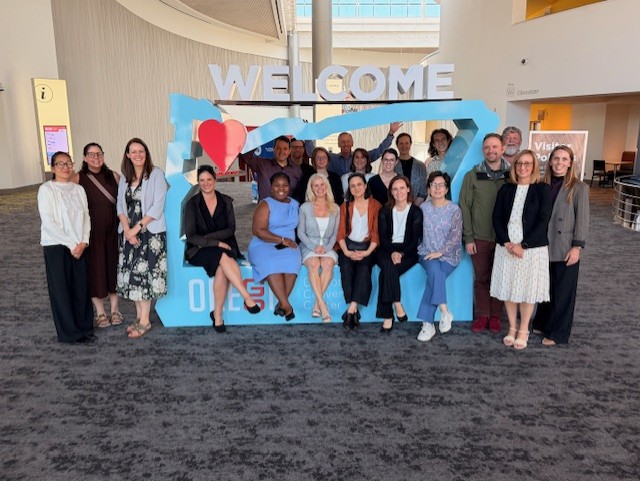
From June 13–17, 2026, the College on Problems of Drug Dependence (CPDD) brought researchers, clinicians, trainees, advocates and partners from across the United States and around the world to Portland, Oregon, for the 88th Annual Scientific Meeting.
Over five days, the CPDD community shared new findings in addiction science, explored emerging questions in substance use disorder research, and strengthened the collaborations helping move the field forward.
The meeting reflected CPDD at its best: outstanding science, thoughtful discussion and a multidisciplinary community committed to improving our understanding of substance use, addiction, treatment, and recovery.
Addiction Science at the Center of CPDD 2026
The Annual Meeting has long served as a forum for presenting timely and consequential research across addiction science. The 2026 meeting in Portland continued the tradition. Across plenary sessions, symposia, oral presentations and posters, attendees explored research spanning the breadth of the field, including epidemiology, prevention, basic and translational neuroscience, clinical research, treatment, recovery, health services and policy.
Presentations and discussions addressed both longstanding challenges and rapidly evolving areas of research. Topics included opioids and medications for opioid use disorder, stimulant use, polysubstance use, emerging synthetic drugs, clinical trials, treatment access and implementation, recovery science and the changing landscape of addiction care.
Just as important as the individual findings were the opportunities to connect ideas across disciplines.
Preclinical researchers encountered new clinical perspectives. Treatment and health services researchers considered questions shaped by real-world implementation. Clinicians, scientists and people with lived and living experience contributed perspectives encouraging the community to think more broadly about how research questions are developed, how evidence is interpreted and how scientific discoveries ultimately reach the people and communities they are intended to serve.
That exchange of perspectives remains one of the defining strengths of the Annual Meeting.
Expanding the Conversation Through Specialty Tracks
Specialty programming added another dimension to the scientific program at CPDD26.
The Real World of Addiction Track brought together researchers, clinicians, policymakers and people with lived and living experience to explore how addiction science can better connect with patient care and real-world implementation.
Addiction NeuroBurst continued to provide a focused forum for SUD neuroscience, creating opportunities for researchers working across human and preclinical science to exchange ideas and build connections.
The meeting also introduced the Lived Experience Track, creating dedicated space to center the insights and scientific contributions of people with lived and living experience of substance use and recovery. The track encouraged broader discussion about what informs addiction research, whose perspectives contribute to scientific discovery and how lived experience can strengthen the relevance, ethics and impact of the field.
For CPDD, these conversations represent an important part of advancing addiction science: bringing different forms of expertise together and creating more opportunities for meaningful dialogue across the research community.
Where Addiction Research Becomes Conversation
Some of the most valuable scientific exchanges at CPDD happen after the final slide. Poster sessions once again served as energetic centers of discussion, giving researchers the opportunity to present new findings, receive feedback, and engage directly with colleagues investigating related questions.
For students, trainees, and early-career investigators, those interactions can be especially meaningful. Hallway conversations, introductions over lunch and unexpected encounters between sessions became extensions of the scientific program itself.
This sense of connection is an important part of the CPDD experience. The Annual Meeting is a place to present addiction research, but it can be so much more. CPDD is a place where collaborations begin, mentorship relationships develop, and researchers at every career stage find colleagues who share their questions, interests, and ambitions.
Portland as the Host of the 88th Annual Scientific Meeting
Portland provided a distinctive setting for the Annual Meeting. The Oregon Convention Center served as the center of the scientific program, while the surrounding city offered attendees opportunities to connect outside meeting hours. Portland's restaurants, bookstores, public transportation and proximity to the landscapes of the Pacific Northwest gave attendees plenty to explore during their time in Oregon.
Locally inspired touches throughout the meeting also brought some of Portland's character into the CPDD experience. It was a fitting backdrop for a meeting built around exploration—of new science, new ideas and new professional connections.
Moving Addiction Science Forward
Perhaps the best measure of a scientific meeting is what happens after everyone goes home. Researchers return to their institutions with new questions to investigate. A conversation beside a poster becomes a collaboration. A trainee meets a future mentor. A presentation changes how someone approaches a scientific problem. An unfamiliar perspective opens a new direction for research.
Those moments happened throughout CPDD2026.
We are grateful to the presenters, poster authors, moderators, committee members, volunteers, award recipients, exhibitors, partners and attendees who made the 88th CPDD Annual Scientific Meeting possible. Most of all, we thank the CPDD community for bringing its curiosity, expertise, and willingness to engage openly with one another.
The addiction science presented in Portland represents important progress. The questions, connections and conversations it generated will help shape where the field goes next.
We look forward to continuing that work when the CPDD community comes together for the 89th Annual Scientific Meeting in Toronto, Canada, June 26–30, 2027.
Until then, thank you for making CPDD 2026 in Portland an exceptional gathering of the addiction science community.